Comfort San Rafael Insulation ServicesComfort San Rafael Insulation Services

Spray foam insulation in San Rafael CA - rooms that hold heat and stop the drafts

Cold room over the garage, hot upstairs or a high power bill? We fix what's up there first, then seal and insulate in one step.

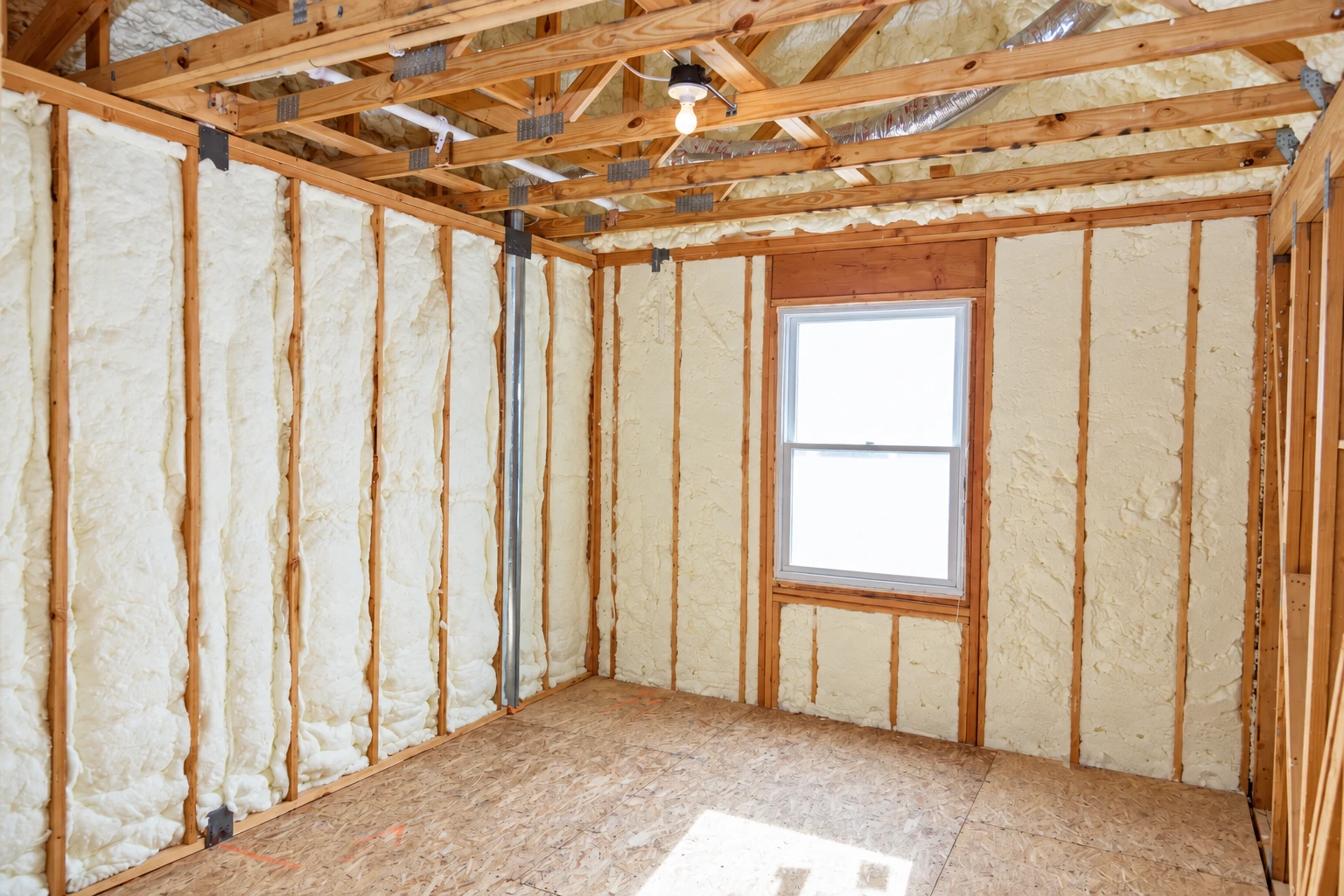
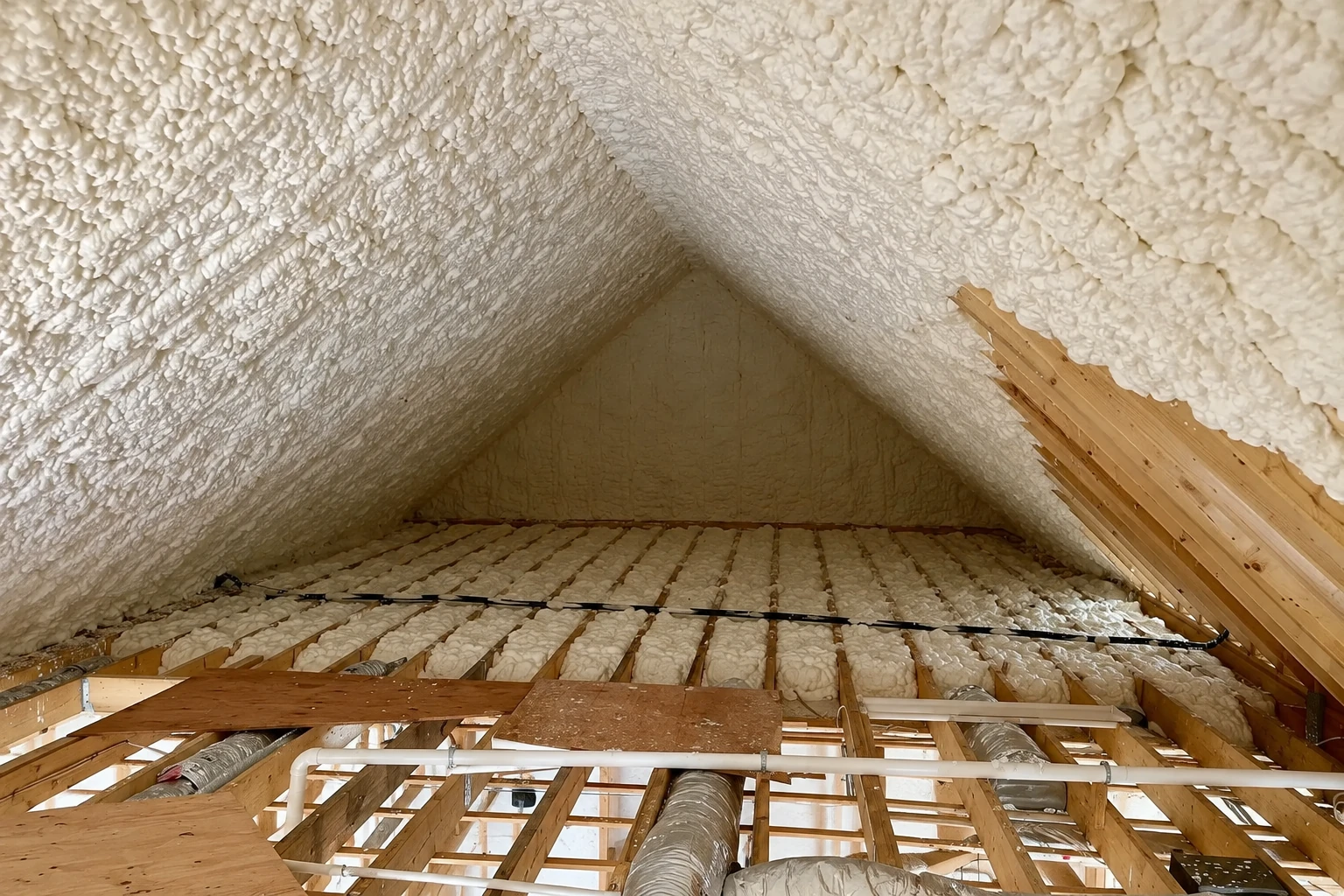
Spray foam insulation coats the sloped roof and walls of an attic above exposed wooden floor joists.

Spray foam insulation is foam our crew sprays onto the rafters, wall framing or crawl space of your San Rafael house, where it fills the gaps, so one layer slows heat and stops drafts at the same time.

Is spray foam right for your San Rafael house?

Most calls start with a room that won't stay comfortable. The room over the garage is cold, the upstairs is hot by afternoon, or the power bill keeps climbing in an older house. Both kinds of foam, the lighter open-cell and the dense closed-cell, block air very well, and that's the big difference from loose fill. It makes foam a strong fit for tight spots where drafts get in.

Three things move the price. The first is the foam type, the second is how many square feet we're covering, and the third is what has to happen first, like pulling out old insulation. The schedule turns on that prep work and on the time you'll stay out after spraying. I look at the space before I write anything down, and the estimate gives you a written price for your house.

What we check before any foam goes in

Spray foam sticks to whatever it lands on and is hard to undo, so these are the things I look at in your attic, walls or crawl space before we plan anything.

Old insulation that's gone bad

If the old batts or loose fill got soaked or are full of droppings, spraying around them keeps the problem in your house. We pull that material out and clean the space first, because foam bonds to what it touches and won't come off easily later.

Where your ductwork runs

When the ducts live in the attic, foaming the underside of the roof brings them inside the warm part of the house, so they stop losing heat to a cold attic. If the ducts run below, down in the house, foam usually isn't the best money spent up there.

Edges and tight corners

A common miss is deep coverage in the middle of an attic and thin coverage at the edges, which is backward, since the eaves and the rim along the walls are where cold gets in. Foam reaches those tight spots well, so we give them full coverage.

What happens after you call about spray foam

Here's how a spray foam job goes from the first call to the walkthrough, and who you'll see at your house at each step along the way.

  1. 1

    Call or send a message

    Call (628) 234-2144 or fill out the form. Tell me what's bothering you, the room or area you want insulated and whether anyone in the house has asthma or allergies.

  2. 2

    I look and write it up

    I come out myself and get into the attic, crawl space or walls to find anything that has to be fixed first. Then I write up an estimate with the foam type, the area and the prep it needs.

  3. 3

    We prep, seal and spray

    If you go ahead, we handle any permit the job needs and prep the space by covering your things and clearing out bad material. Then our crew seals and sprays while I run the job on site.

  4. 4

    Walk through it together

    Before we leave, I walk you through what we did and where the foam went. I'll also tell you when it's okay for you, the kids and the pets to come back inside.

Request an estimate

How we plan a spray foam insulation job

The first call I make is open-cell or closed-cell, and it comes down to the spot and what you want from it. A tight space that needs all the warmth it can hold points one way, and a bedroom wall you want quieter points the other. Before we settle on a foam, I ask whether anyone in the house has asthma or allergies, because that can change the answer.

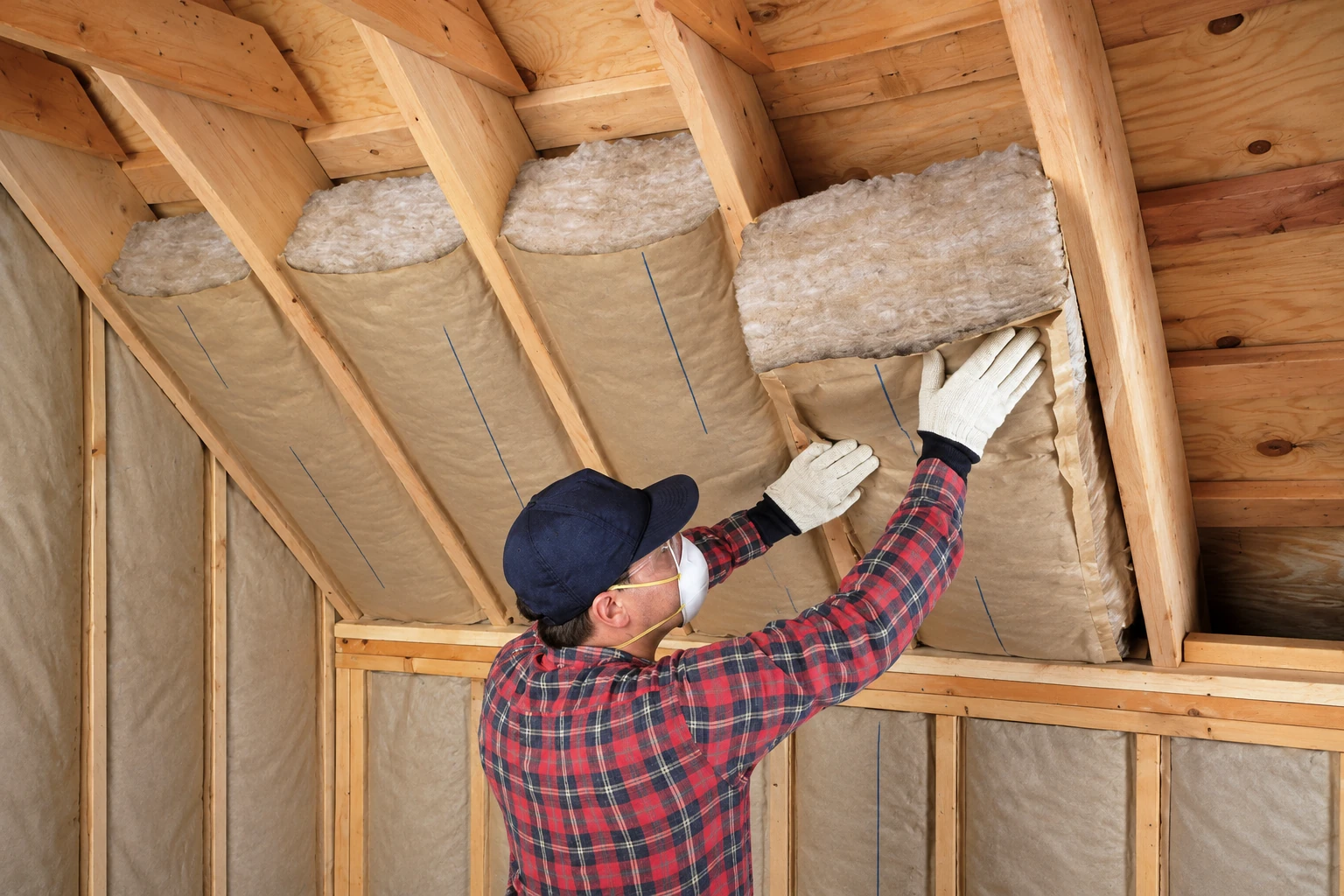
Foam costs more than loose fill, and what you get for it is air sealing and insulation in one step. When your ducts aren't up in the attic, closing the gaps around lights, pipes and the hatch and then topping up your attic insulation with blown-in insulation, loose fill blown through a hose, usually wins. I'd rather tell you that than sell you foam that won't pay off.

Foam at the roofline

We spray the underside of the roof so the attic becomes part of the warm house. This makes the most sense when your ducts or furnace live up there and you want them out of the cold.

Seal and top up loose fill

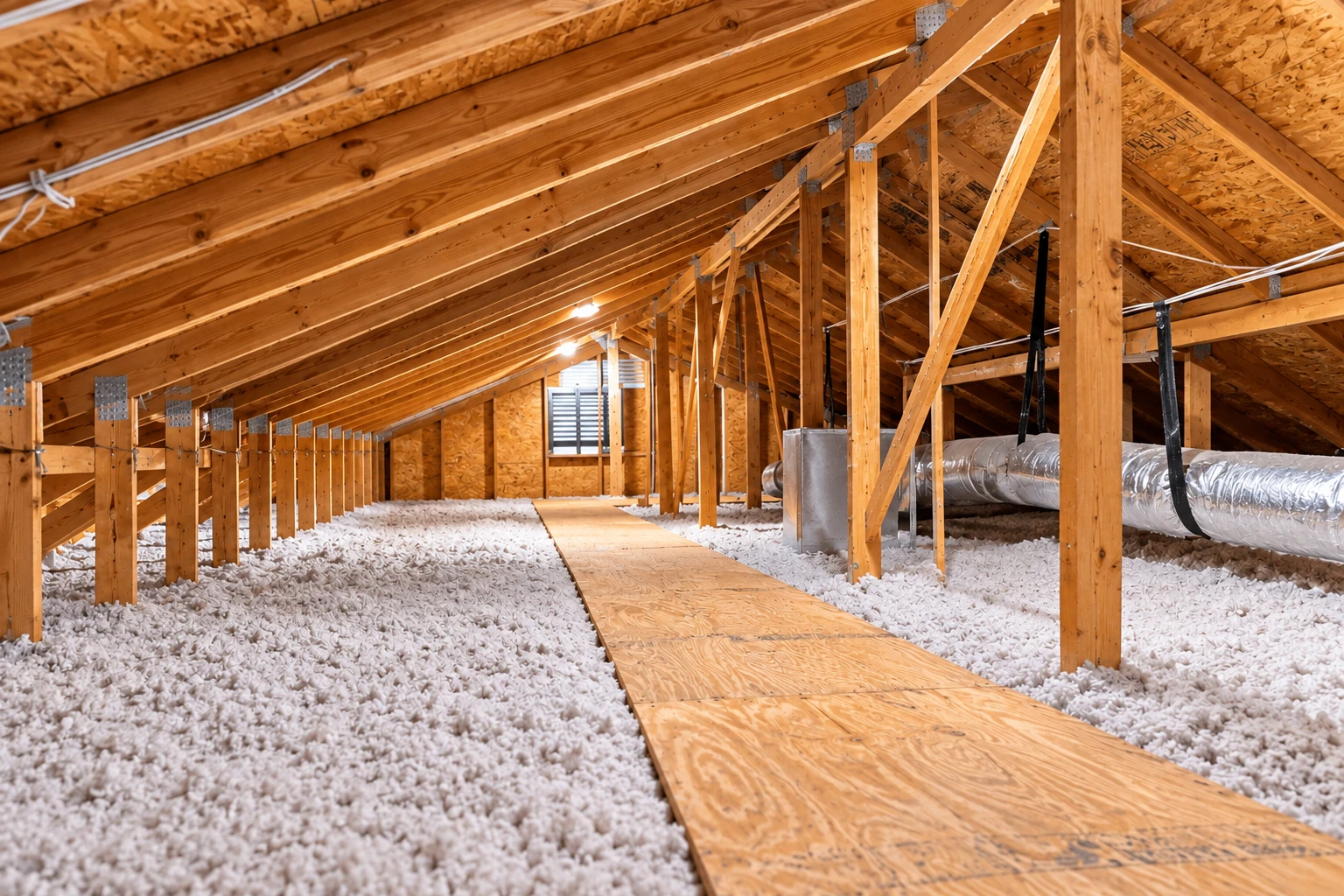
We close the gaps, then add loose fill over the attic floor. It usually costs less and does the job when nothing up there needs to stay warm, and foam can still go in the tight spots.

Get a written spray foam estimate for your house

We reply to every call and form within one business day. I'll set a time to come out, look at the space and write up a free in-person estimate, and there's no obligation to go ahead.

(628) 234-2144

hello@sanrafaelinsulation.com

Planning spray foam insulation in San Rafael

Work on existing homes here falls under the city's building office and the state Energy Code, which sets efficiency rules for changes to existing homes as well as new ones. I won't guess whether your spray foam job needs a permit. I check before we start, and if it needs one, we pull it through the office that covers your address and set up the inspection.

Most of our calls here come from older homes, with old insulation in the attic, a cold room over the garage or a crawl space nobody has looked at in years. We're based in San Rafael and work across Marin and nearby, from Petaluma down to Strawberry and over to Richmond and Berkeley, including San Anselmo and Novato. If your city isn't named on the site, call and ask.

Why San Rafael homeowners call us for spray foam

I started Comfort San Rafael Insulation Services in 2023 after years of insulating new houses, where the walls are open and nobody lives there yet. Lived-in homes taught me that leaks and problems get fixed first, or new insulation doesn't do much. I come out to look at the job myself, and our crew does the install with me on site running it.

We're licensed and insured. The state contractor license board has a class just for insulation work, covering any material put in to control heat or sound. Every job is backed by our satisfaction guarantee. To get started, call (628) 234-2144 or send us the form.

Attic insulation

A good fit when the attic floor is thin and the rooms below run hot or cold, but nothing up there needs to stay warm.

Blown-in insulation

Loose fill settles around joists and wiring in an open attic, so it's the usual way to bring thin spots up once the gaps are closed.

Where we install spray foam around Marin

We're based in San Rafael and do spray foam in cities across Marin and nearby. The cities below have their own pages, and if yours isn't listed, call and ask.

Spray foam questions from San Rafael homeowners

Should I pick open-cell or closed-cell spray foam?

Pick closed-cell if you need the most insulation in a tight space, and open-cell if you want quieter rooms. Closed-cell is about twice as energy efficient per inch, while open-cell does a much better job of blocking sound. Both block air well, so either one stops drafts.

How much does spray foam insulation cost in San Rafael?

Spray foam in the San Francisco Bay Area usually costs about $2 to $6 per square foot. Open-cell sits at the lower end and closed-cell at the upper end, since it's the denser foam. Your own price depends on the area and the prep it needs, and it's in the written estimate.

How long do we have to stay out of the house after spray foam?

Some foam makers recommend 24 hours after a professional spray before people move back in, but the time can vary by product. Plan on time away from that part of the house, and I'll give you the time set for the foam we use, so you know when the kids and pets can come back.

Is spray foam safe if someone in my house has asthma?

Spray foam may not be the right choice, and it's worth reading the product information before you decide. People with asthma, respiratory allergies, skin conditions or a past sensitivity to isocyanates, a chemical in the foam, should review it carefully, and some households may want to look at other insulation instead. That's why I ask at the estimate.

Can I use closed-cell spray foam in my walls?

You can, but closed-cell foam at typical thickness slows moisture, so a frame wall won't be able to dry well to the outside. Open-cell lets moisture through, so the better pick for a wall depends on how that wall needs to dry. I look at that before recommending either one.

Does spray foam have to be covered after it's installed?

It may, depending on the maker. Some products need a thermal or ignition barrier, a layer that covers the foam, and that can add a step to the job. I check what your product calls for and put it in the estimate, so it isn't a surprise later.

How do I get my attic ready for spray foam?

Clear out the boxes and anything else stored up there, and plan where you'll stay while the crew sprays and the foam sets. We cover the rest of the house, pull out any bad old insulation and handle the prep in the space itself.

Call to set up your spray foam estimate

If something in your attic has to be fixed before foam goes in, you'll know at the estimate instead of halfway through the job, so call (628) 234-2144 or use the form.

(628) 234-2144Request an estimate